|
MATERIAL SAFETY DATA SHEET
SECTION 1:
PRODUCT AND MANUFACTURER
|
Product
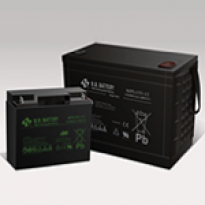
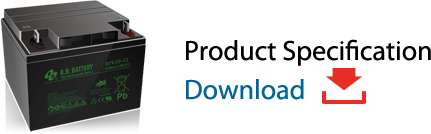
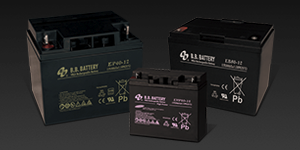
name: Sealed maintenance-free lead acid batteries
Manufacturer: B.B. Battery Co., Ltd.
Address:
Chengdong Trial Area, Huanggang, Raoping, Guangdong, P.R.China 515700
Tel:
+86-768-7601001 or +86-768-7601002
Fax:
+86-768-7601469
US Office:
B&B Battery USA, Inc.
Address:
6415 Randolph Street, Commerce, CA 90040
Tel:
323-278-1900
Fax:
323-278-1268 |
SECTION 2: HAZARDOUS COMPONENTS
|
COMPONENTS |
%WEIGHT |
TLV |
LD50 ORAL |
LC50
INHALATION |
LC50
CONTACT |
|
Lead (Pb,
PbO2, PbSO4) |
About 70% |
N/A |
(500) mg/Kg |
N/A |
N/A |
|
Sulfuric
Acid |
About 20% |
1 mg/m3 |
(2.140)
mg/Kg |
N/A |
N/A |
|
Fiberglass
Separator |
About 5% |
N/A |
N/A |
N/A |
N/A |
|
ABS or PP |
About 5% |
N/A |
N/A |
N/A |
N/A |
SECTION 3: PHYSICAL DATA
|
COMPONENTS |
DENSITY |
MELTING
POINT |
SOLLUBILITY
(H2O) |
ODOR |
APPEARANCE |
|
Lead |
11.34 |
327.4°C
(Boiling) |
None |
None |
Sliver-Gray
Metal |
|
Lead
Sulfate |
6.2 |
1070°C
(Boiling) |
40 mg/l
(15°C) |
None |
White
Powder |
|
Lead
Dioxide |
9.4 |
290°C
(Boiling) |
None |
None |
Brown
Powder |
|
Sulfuric
Acid |
About 1.3 |
About 114°C
(Boiling) |
100% |
Acidic |
Clear
Colorless Liquid |
|
Fiberglass
Sep. |
N/A |
N/A |
SLIGHT |
TOXIC |
WHITE
FIBROUS GLASS |
|
ABS or PP
|
N/A |
N/A |
NONE |
NO ODOR |
SOLID |
SECTION 4:
PROTECTION
|
EXPOSURE |
PROTECTION |
COMMENTS |
|
SKIN |
Rubber
gloves, Apron, Safety shoes |
Protective
equipment must be worn if battery is cracked or otherwise damaged. |
|
RESPIRATORY |
Respirator
(for lead) |
A
respirator should be worn during reclaim operations if the TLV exceeded. |
|
EYES |
Safety
goggles, Face Shield |
|
SECTION 5:
FLAMMABILITY DATA
|
COMPONENTS |
FLASHPOINT |
EXPLOSIVE
LIMITS |
COMMENTS |
|
Lead |
None |
None |
|
|
Sulfuric
Acid |
None |
None |
|
|
Hydrogen |
259℃ |
4% - 74.2% |
Sealed
batteries can emit hydrogen only if over charged (float voltage> 2.4 VPC).
The gas enters the air through the vent caps. To avoid the chance of a fire
or explosion, keep sparks and other sources of ignition away from the
battery.
Extinguishing Media: Dry chemical, foam, CO2 |
|
Fiberglass
Sep. |
N/A |
N/A |
Toxic
vapors may be released.
In case of
fire: wear self-contained breathing apparatus. |
|
478
Polystyrene |
None |
N/A |
Temperatures over 300 °C (572°F) may release combustible gases. In case of
fire: wear positive pressure self-contained breathing apparatus. |
SECTION 6:
REACTIVITY DATA
|
COMPONENT |
Lead/lead
compounds |
|
STABILITY |
Stable |
|
INCOMPATIBILITY |
Potassium,
carbides, sulfides, peroxides, phosphorus, sulfurs. |
|
DECOMPOSITION PRODUCTS |
Oxides of
lead and sulfur. |
|
CONDITIONS
TO AVOID |
High
temperature, Sparks and other sources of ignition. |
|
COMPONENT |
Sulfuric
Acid |
|
STABILITY |
Stable at
all temperatures |
|
POLYMERIZATION |
Will not
polymerize |
|
INCOMPATIBILITY |
Reactive
metals, strong bases, most organic compounds |
|
DECOMPOSITION PRODUCTS |
Sulfuric
dioxide, trioxide, hydrogen sulfide, hydrogen |
|
CONDITIONS
TO AVOID |
Prohibit
smoking, sparks, etc. from battery charging area. Avoid mixing acid with
other chemicals. |
SECTION 7:
CONTROL MEASURES
|
|
|
1. Store
lead/acid batteries with adequate ventilation. Room ventilation is required
for batteries utilized for standby power generation. Never recharge
batteries in an unventilated, enclosed space.
2. Do not
remove vent caps. Follow shipping and handling instructions that are
applicable to the battery type. To avoid damage to terminals and seals, do
not double-stack industrial batteries.
STEPS TO TAKE IN
CASE OF LEAKS OR SPILLS
If sulfuric
acid is spilled from a battery, neutralize the acid with sodium bicarbonate
(baking soda), sodium carbon (soda ash), or calcium oxide (lime).
Flush the
area with water discard to the sewage systems. Do not allow unneutralized
acid into the sewage system.
WASTE
DISPOSAL METHOD:
Neutralized
acid may be flushed down the sewer. Spent batteries must be treated as
hazardous waste and disposed of according to local state, and federal
regulations. A copy of this material safety data must be supplied to any
scrap dealer or secondary smelter with battery.
ELECTRICAL SAFETY
Due to the
battery’s low internal resistance and high power density. High levels of
short circuit can be developed across the battery terminals. Do not rest
tools or cables on the battery. Use insulated tools only.
Follow all
installation instruction and diagrams when installing or maintaining battery
systems. |
SECTION 8: HEALTH
HAZARD DATA
|
LEAD:
The toxic effects of lead are accumulative and slow to appear. It affects
the kidneys, reproductive, and central nervous system.
The
symptoms of lead overexposure are anemia, vomiting, headache, stomach pain
(lead colic), dizziness, loss of appetite, and muscle and joint pain.
Exposure to lead from a battery most often occurs during lead reclaim
operations through the breathing or ingestion of lead dusts and fumes.
THIS DATA
MUST BE PASSED TO ANY SCRAP OR SMELTER WHEN A BATTERY IS RESOLD.
|
|
SULFURIC
ACID:
Sulfuric acid is a strong corrosive. Contact with acid can cause severe
burns on the skin and in the eyes. Ingestion of sulfuric acid will cause GI
tract burns. Acid can be release if the battery case is damaged or if the
vents are tampered with. |
|
FIBERGLASS
SEPARATOR:
Fibrous glass is an irritant of the upper respiratory tract, skin and eyes.
For exposure up to 10F/CC use MSA Comfort with type H filter. Above 10F/CC
up to 50F/CC use Ultra-Twin with type H filter.
NTP or OSHA
does not consider this product carcinogenic. |
SECTION 9:
SULFURIC ACID PRECAUTIONS
|
INHALATION:
Acid mist form formation process may cause respiratory irritation, remove
from exposure and apply oxygen if breathing is difficult.
SKIN
CONTACT:
Acid may cause irritation, burns or ulceration. Flush with plenty of soap
and water, remove contaminated clothing, and see physician if contact area
is large or if blisters form.
EYE CONTACT:
Acid may cause severe irritation, burns, cornea damage and blindness. Call
physician immediately and flush with water until physician arrives.
INGESTION:
Acid may cause irritation of mouth, throat, esophagus and stomach. Call
physician. If patient is conscious, flush mouth with water, have the patient
drink milk or sodium bicarbonate solution.
DO NOT GIVE
ANYTHING TO AN UNCONSCIOUS PERSON. |
SECTION 10:
TRANSPORTATION REGULATIONS
|
We hereby certify that
all B.B. Battery Maintenance Free Rechargeable Sealed Lead Acid batteries
conform to the UN2800 classification as “ Batteries, wet, Non- Spillable,
and electric storage”
as a result of
passing the Vibration and Pressure Differential Test described in DOT [49
CFR 173.159(d) and IATA/ICAO [Special Provision A67].
B.B. Batteries having met
the related conditions are EXEMPT from hazardous goods regulations for the
purpose of transportation by DOT, and IATA/ICAO, and therefore are
unrestricted for transportation by any means.
For all
modes of transportation, each battery outer package is labeled "NON-SPILLABLE". |
Welcome to BB Battery

|